SILICON VALLEY
Speed through creation and learning
Rapid experimentation
Early customer feedback
Parallel development
Venture investment
Startup partnerships
Rapid resource allocation
EXECUTIVE MASTERCLASS
Executive Masterclass for Swiss and German Technology Leaders
Technology markets increasingly reward one capability above almost everything else:
The ability to learn and act faster than competitors.
Silicon Valley has creation and learning speed.
China has execution speed.
Europe has engineering excellence.
.png)
AI, robotics, autonomous systems, software-defined products and advanced manufacturing are shortening traditional technology and product cycles.
For established technology companies, the challenge is no longer simply to innovate.
It is to shorten the time between:
Speed is not about rushing. It is about learning faster.
The Masterclass examines speed through the Global Technology Competitiveness Framework™ and focuses particularly on four capabilities:

How quickly can we identify opportunities, make decisions, mobilize talent and turn ideas into experiments?

How quickly can we turn ideas into technologies, products and customer solutions?

How quickly can we allocate resources to winners and turn successful innovations into significant businesses?

How quickly can we recognize a new technology wave, change direction, reallocate resources and build the capabilities required for it?

Speed through creation and learning
Rapid experimentation
Early customer feedback
Parallel development
Venture investment
Startup partnerships
Rapid resource allocation
Speed through execution
Rapid product cycles
Hardware + software integration
Manufacturing speed
Integrated supply chains
Fast commercialization
Scaling

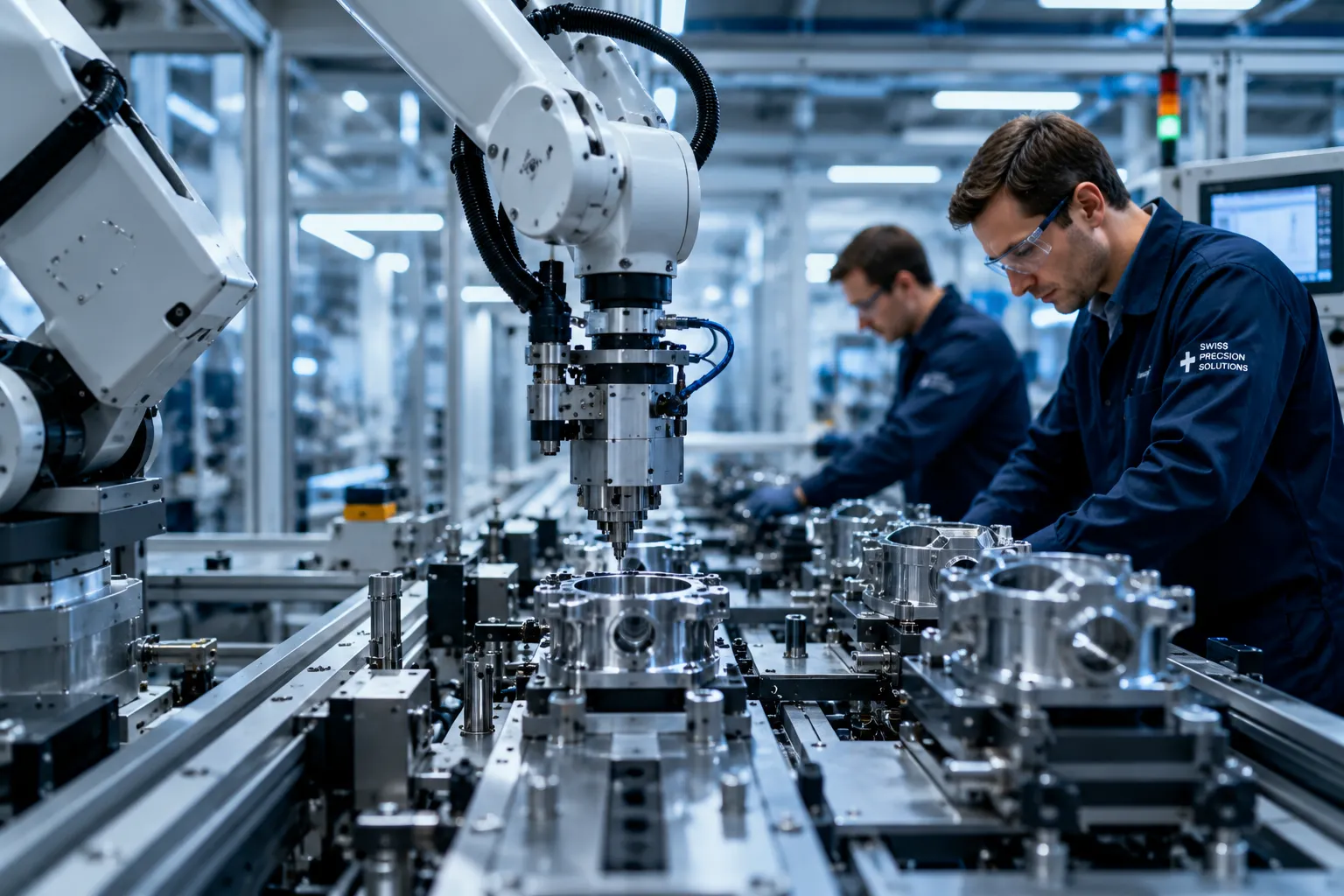
Engineering excellence
Engineering depth
Precision
Quality
Reliability
Industrial expertise
Long-term customer relationships
What if we could combine the best of all three?
Silicon Valley creation / learning speed + Chinese execution speed + European engineering excellence.
How long does it take from:
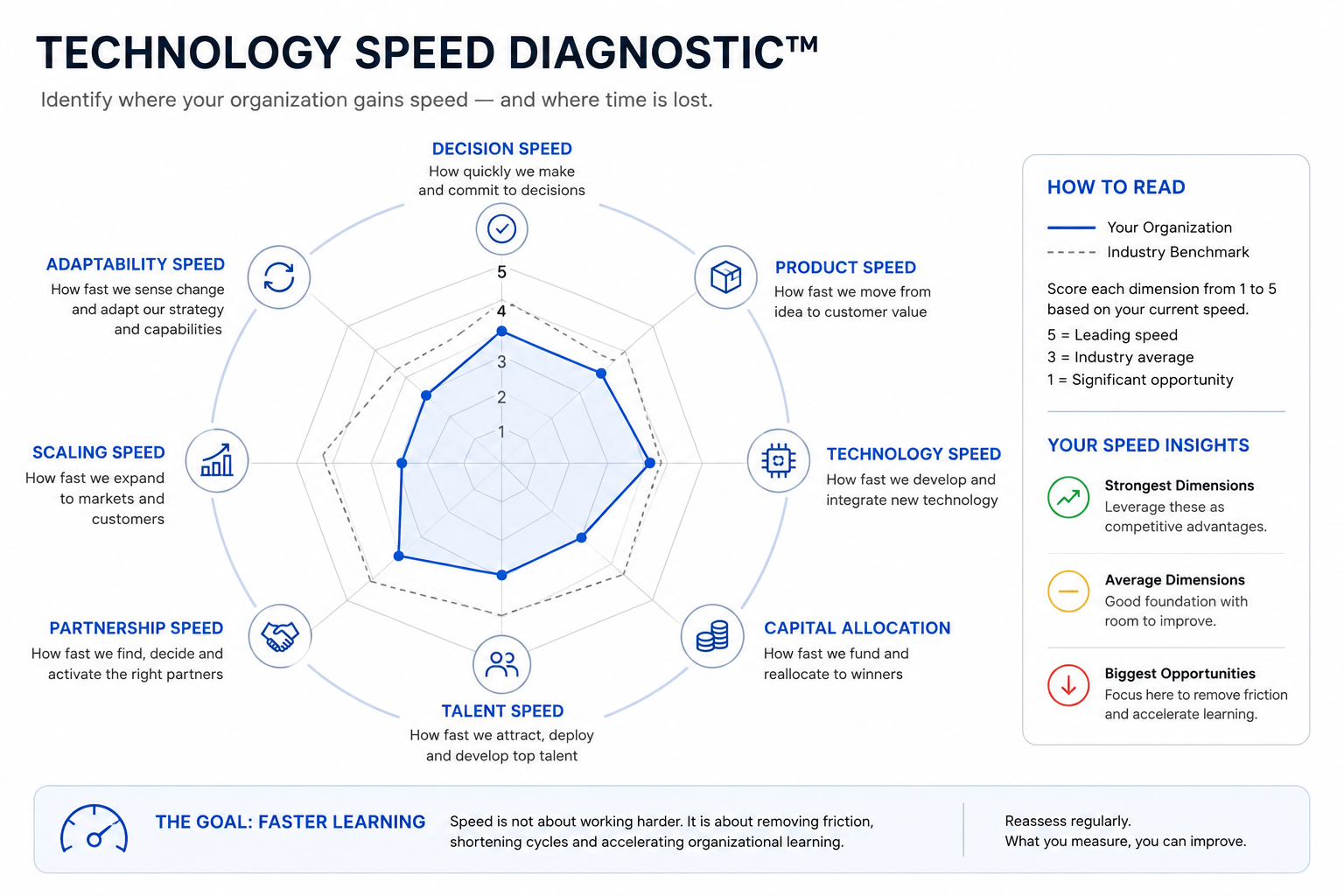
Participants use the Technology Speed Diagnostic™ to indentify bottlenecks across:
The objective is not to work faster. It is to identify organizational friction that unnecessarily slows learning and execution.
This is not a conference presentation.
Participants bring one real challenge from their organization and develop a concrete acceleration plan.

CEOs & Managing Directors
Board Members
CTOs & CIOs
COOs
Chief Strategy Officers
Heads of R&D
Heads of Innovation
Product & Technology Leaders
Particularly relevant for
Hidden Champions, industrial technology companies and leading technology firms competing internationally.
- Technology Speed Diagnostic™
- Silicon Valley / China / Europe comparison
- Decision-speed checklist
- Experimentation framework
- 90-Day Speed Challenge
- Selected case studies and readings
- Early copy of Ralf Haller's upcoming book The European Comeback?
- Free entrance to one Executive Briefing event (e.g. China or Silicon Valley meets Switzerland event)
Plus :
A concrete plan for making your organization faster.
Half day + networking
15–25 participants
Highly interactive
Case studies + exercises + peer discussion
Switzerland & Germany
Europe does not need to become Silicon Valley.
And it does not need to become China.
It can learn from both.
Combine Silicon Valley's learning speed with China's execution speed and Europe's engineering excellence.
That could become a powerful model for the next generation of European technology companies.