



Europe and Switzerland produce outstanding startups.
They develop world-class technology.
They attract international investors.
They solve real industry problems.
Yet, despite this strength, Europe repeatedly struggles to capture major technology waves.
From internet infrastructure to cloud computing, mobile platforms, and now artificial intelligence — leadership has largely shifted elsewhere.
One of the most overlooked reasons is not talent, funding, or research excellence.
It is collaboration.
More specifically:
👉 How large enterprises and startups work together.
Silicon Valley Uses a Fundamentally Different Collaboration Model
In Silicon Valley, startups are rarely treated as small vendors or risky experiments.
They are viewed as:
• Early technology scouts
• Strategic innovation partners
• Investment opportunities
• Talent accelerators
• Ecosystem builders
Large enterprises actively collaborate with startups long before technologies are fully mature.
Not because success is guaranteed.
But because missing the next technology wave is often far more dangerous than engaging too early.
The Ideal Enterprise–Startup Relationship
1. Enterprises Act as Early Design Partners
The most successful collaborations begin long before a product is market-ready.
Enterprises help startups shape solutions from the beginning.
This creates multiple advantages:
• Technology solves real enterprise problems
• Startups build relevant products faster
• Corporates gain early access to competitive capabilities
In Silicon Valley, many breakthrough enterprise technologies emerged from these early co-development partnerships.
2. Procurement Enables Experimentation Instead of Blocking It
Traditional procurement processes are designed to minimize risk and ensure stability.
However, these structures often unintentionally prevent startups from working with large organizations.
Leading technology ecosystems therefore introduce:
• Dedicated pilot budgets
• Fast experimentation frameworks
• Simplified onboarding processes for startups
• Separate procurement tracks for innovation projects
The goal is not to eliminate risk.
The goal is to manage it intelligently while enabling speed.
3. Corporates Adopt Portfolio Thinking
Not every startup collaboration will succeed.
In fact, most will not.
Silicon Valley accepts this reality and applies a portfolio mindset.
Enterprises engage with multiple startups simultaneously, understanding that:
One breakthrough collaboration can outweigh several unsuccessful pilots.
This investment logic has been fundamental in building entire technology ecosystems in the United States.
4. Startups Gain Enterprise Reality Early
Strong partnerships are always two-sided.
Startups benefit enormously when they work with enterprise partners early.
They gain:
• Real production feedback
• Credibility with investors
• Reference customers
• Understanding of regulatory and operational complexity
This dramatically increases startup survival rates and accelerates product maturity.
5. Trust Replaces Transactional Engagement
The strongest technology ecosystems are built on long-term relationships.
Not one-off proof-of-concept projects.
But repeat collaborations that evolve over time into strategic partnerships, joint ventures, or investment relationships.
Trust becomes the foundation that enables faster execution and shared risk-taking.
Why This Collaboration Model Matters More Than Ever
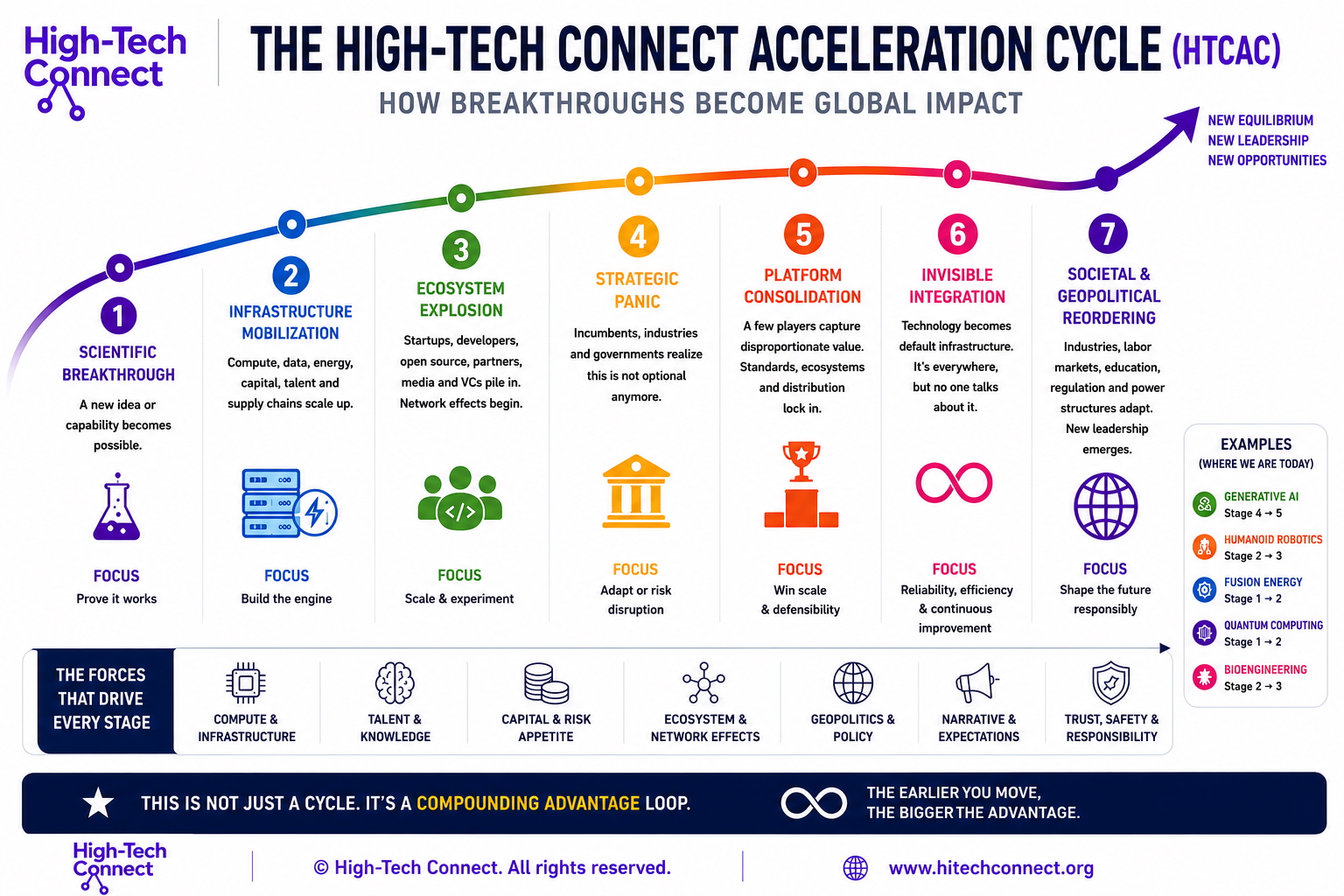
The technology landscape is changing rapidly.
Artificial intelligence, deep-tech innovation, quantum computing, and advanced infrastructure all require:
• Significant investment
• Fast iteration cycles
• Cross-industry expertise
• Ecosystem-level collaboration
No single company can master these challenges alone.
Competitiveness increasingly depends on how effectively enterprises, startups, and research institutions work together.
Europe’s Opportunity
Europe and Switzerland have extraordinary advantages:
• World-class universities
• Highly specialized industrial expertise
• Strong research output
• High-quality engineering talent
• Stable regulatory and business environments
What often remains missing is early and bold collaboration between startups and large enterprises.
Bridging this gap could become Europe’s most important competitive advantage in the coming decade.
Building the Next Collaboration Model
The future belongs to organizations that:
• Engage startups earlier
• Accept calculated risk
• Build long-term innovation partnerships
• Treat collaboration as a strategic capability
T
echnology leadership will increasingly be determined by ecosystem strength — not company size alone.
Why This Conversation Is Urgent Now
The global AI race demonstrates how quickly technological leadership can concentrate in regions where capital, risk-taking, and collaboration align.
Europe cannot win this race by copying Silicon Valley or China.
But it can succeed by leveraging its own strengths:
Industrial depth, engineering excellence, and trusted enterprise relationships.
If these strengths are combined with faster startup collaboration, Europe can remain globally competitive.
This Is Exactly the Conversation We Want to Drive at SVMS-8
At Silicon Valley Meets Switzerland (SVMS-8), we bring together:
• Silicon Valley founders and investors
• Swiss and European enterprise leaders
• Deep-tech startups
• Researchers and ecosystem builders
Together, we explore how collaboration models must evolve — and how enterprises and startups can build partnerships that shape future technology leadership.
Because in the end, competitiveness is no longer just about technology.
It is about how effectively ecosystems work together.
👉 Learn more about SVMS-8:
https://www.hitechconnect.org/svms-8













.jpg)


.jpg)


