


If we want to talk seriously about Europe’s position in AI, we need to start with an uncomfortable truth:
We cannot compete if we don’t first acknowledge where we lost — and why.
For years, Europeans have been told that this time will be different.
That Europe is “catching up”.
That talent is enough.
That regulation will somehow compensate for missing scale.
None of that has proven true so far.
The Core Problem: Capital Follows Winners — Not Intentions
Funding gaps don’t appear by accident.
They are the outcome of 40 years of missed tech cycles.
Capital flows where:
- Platforms emerge
- Global standards are set
- Large exits recycle money into the next generation
That is why the gap exists — and why it keeps widening.
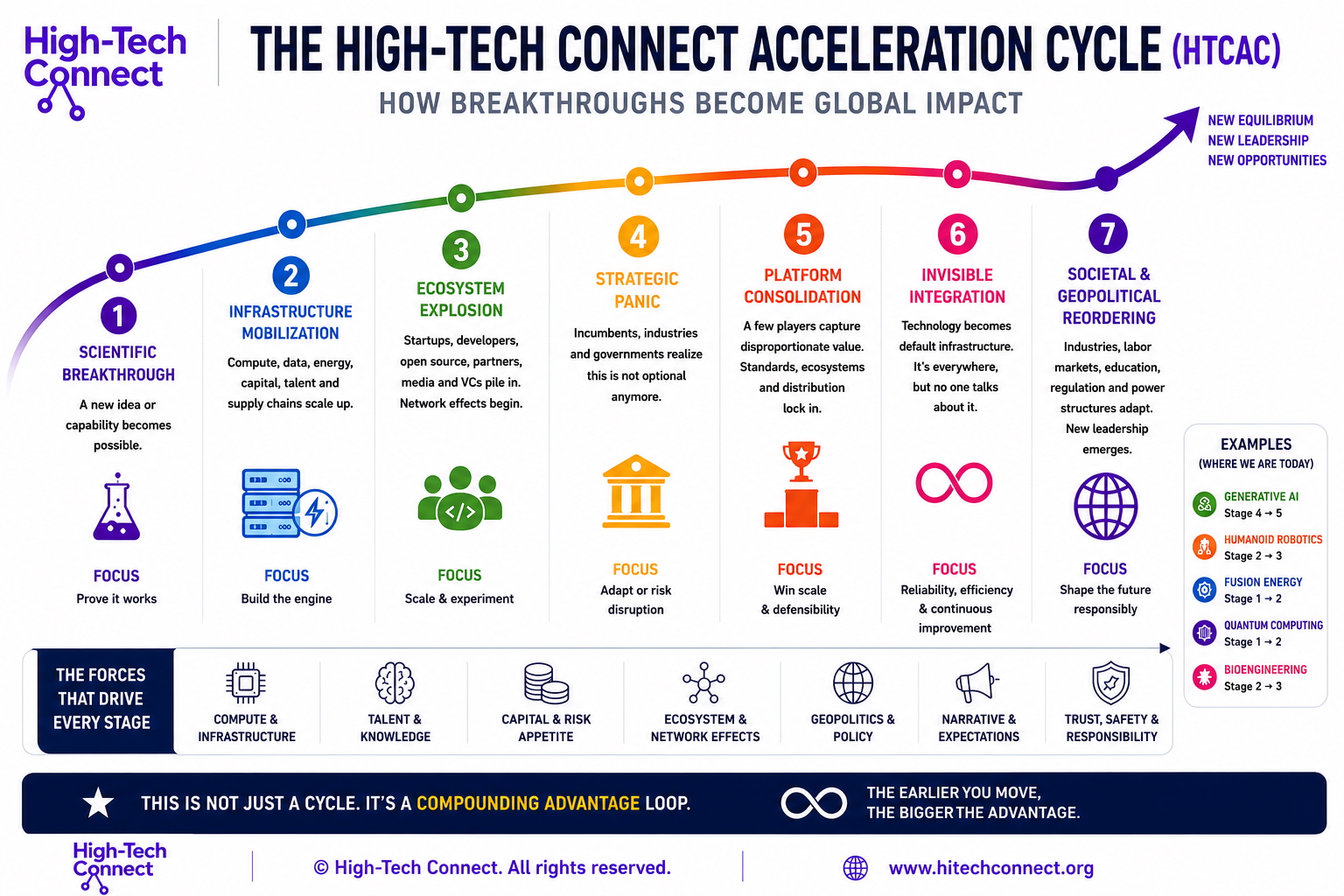
A Look Back: The Tech Waves Europe Didn’t Win
Let’s be honest about recent history.
Europe has not won a single dominant global tech wave in the last four decades.
🌐 Internet Platforms
The modern internet economy was built in the United States:
- Search
- Social networks
- E-commerce
- Advertising platforms
Europe produced strong engineers — but no global consumer platforms.
📱 Mobile & Smartphones
Europe led early with Nokia and Ericsson — then lost the platform war.
- Operating systems moved to the US
- App ecosystems followed
- Value creation shifted entirely
The smartphone era became an American-led platform economy.
🖥️ IT Infrastructure & Enterprise Software
From databases to operating systems to developer platforms:
- US companies set the standards
- US VCs funded scale
- US exits recycled capital
Europe became a buyer, not a builder.
📡 Telecom: Fixed, Wireless & Data Networking
Telecom is often cited as a European strength — but even here:
- Fixed networks and fiber leadership shifted to China
- Wireless infrastructure became geopolitically fragmented
- Data networking value creation moved elsewhere
The industrial base remained — the platform economics did not.
☁️ Cloud Computing
Cloud sealed the gap.
- Hyperscale requires massive upfront capital
- Global platforms demand patience, risk, and scale
Europe never seriously entered this race.
And once cloud was lost, AI infrastructure followed automatically.
Why AI Is Different — and Harder
AI is not just another software wave.
It stacks costs:
- Compute
- Data
- Talent
- Energy
- Long time horizons without revenue
Today, the numbers are brutal:
- The US deploys hundreds of billions
- China mobilizes state-backed capital
- Europe debates frameworks and pilots
This isn’t a moral failure — it’s a structural one.
Why “This Time Will Be Different” Is Not a Strategy
Many well-meaning voices claim:
- “Europe has better research”
- “Europe has more ethical AI”
- “Europe doesn’t need hyperscalers”
But belief is not a funding model.
You cannot solve a capital gap by:
- Renaming innovation
- Publishing whitepapers
- Regulating competitors
A problem only becomes solvable once it is clearly recognized.
Pretending the gap doesn’t exist delays the only discussion that matters:
Where can Europe realistically still win?
Facing Reality Is the First Competitive Advantage
Seeing this clearly is not pessimism — it’s strategic maturity.
Europe does not need to win every race.
But it does need to stop running races it cannot afford.
Only then can we:
- Focus capital where leverage still exists
- Play to industrial strengths
- Build defensible niches instead of copycat platforms












.jpg)


.jpg)


